- +1 888-840-3334
- reach@techdatapark.com
- 3080 Olcott St D205, Santa Clara, CA 95054, United States

Golang, also known as Go, has rapidly evolved into one of the most trusted programming languages for modern software development. Originally created by Google in 2009, Go was designed to solve scalability, speed, and engineering productivity challenges in massive distributed systems. Its clean syntax, powerful concurrency model, and high performance have made it a top choice for startups and global enterprises alike.
Today, Golang powers production environments at companies like Uber, Netflix, PayPal, Cloudflare, and many more. From cloud platforms to payment systems, cybersecurity networks, and real-time streaming apps, Go is now a preferred language for organizations that require reliability, speed, and effortless scalability.
Businesses worldwide continue adopting Go because it helps engineering teams build faster, deploy smarter, and scale with confidence.
If you’re researching companies using Golang, exploring enterprise adoption trends, or building a verified Golang users list, this guide provides valuable insights, market trends, and growth opportunities.



















Golang, often called Go, is an open-source programming language that Google created in 2009. Engineers at Google built it specifically to solve scalability problems in large software systems—the kind of challenges that come with serving billions of users daily.
Tech giants like Google, Uber, Netflix, and Dropbox use Go to power critical infrastructure. Google runs YouTube’s backend and Google Cloud Services on Go. Uber rebuilt its real-time dispatch systems with it. Netflix manages thousands of cloud microservices through Go-based tools. Dropbox migrated performance-critical components from Python to Go for better efficiency.
So what exactly is Go used for? Primarily backend services, cloud infrastructure, DevOps tools, and microservices. The language compiles directly to machine code, which means programs run fast without needing a virtual machine. Go also handles concurrent programming well through features called goroutines and channels—lightweight threads that let programs manage thousands of parallel tasks efficiently.

| Company | Industry | Primary Golang application | Notable scale |
|---|---|---|---|
|
Google |
Technology |
Cloud infrastructure, YouTube backend |
Billions of daily users |
|
Uber |
Transportation |
Geofence service, dispatch systems |
Millions of rides daily |
|
Netflix |
Media streaming |
Container management, tracing |
200M+ subscribers |
|
Docker |
Infrastructure |
Container platform |
Millions of deployments |
|
Cloudflare |
Security/CDN |
Edge computing, DNS |
25M+ internet properties |
|
Dropbox |
Cloud storage |
File sync infrastructure |
700M+ registered users |
|
Twitch |
Live streaming |
Chat, video delivery |
30M+ daily users |
|
SoundCloud |
Audio streaming |
Backend services, APIs |
300M+ tracks |
|
American Express |
Financial services |
Payment processing |
High-volume transactions |
|
PayPal |
Payments |
Transaction systems |
400M+ active accounts |
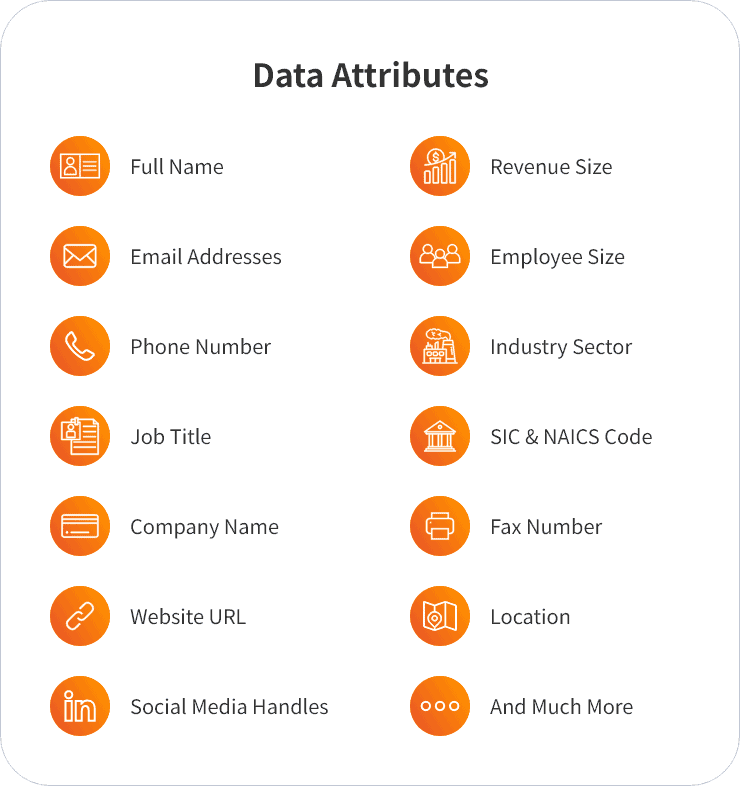
Our Golang Companies List is built to help businesses reach verified organizations using Golang technology for software development, cloud platforms, backend systems, and enterprise applications. The database includes valuable company insights, decision-maker contacts, and technographic intelligence that support smarter prospecting and higher-quality lead generation.
1. Company Information
Get complete business details such as company name, official website, headquarters location, branch offices, industry category, and business type. This helps you understand the organization before starting outreach.
2. Contact Details
Access verified professional contacts including key decision-makers like CTOs, Engineering Heads, IT Directors, and senior developers. Available fields may include business email addresses, phone numbers, and LinkedIn profiles.
3. Firmographic Data
Understand company size, employee count, annual revenue, founded year, and growth stage. These attributes help sales teams prioritize companies that match their ideal customer profile.
4. Technographic Insights
Identify companies actively using Golang along with related technologies such as cloud platforms, DevOps tools, databases, containers, and software infrastructure solutions.
5. Geographic Filters
Segment your target audience by country, region, state, city, or specific business markets. This is ideal for local, national, or global B2B campaign planning.
6. Marketing Intelligence
Additional data points may include hiring trends, expansion signals, funding activity, buying intent indicators, and market movement insights to help improve campaign timing and conversions.
With these rich data attributes, businesses can build highly targeted campaigns, improve personalization, and connect faster with companies using Golang in 2026.
Our sample data gives you a preview of accurate and targeted contacts from organizations actively using Golang technology. This helps you evaluate data quality, targeting options, and market relevance before making a decision.
| Company Name | Website URL | Contact Name | Category | Revenue | Business Email ID | Phone Number |
|---|---|---|---|---|---|---|
|
Deloitte |
www.******.com |
******** |
******** |
******** |
******** |
******** |
|
Accenture |
www.******.com |
******** |
******** |
******** |
******** |
******** |
|
Northrop Grumman |
www.******.com |
******** |
******** |
******** |
******** |
******** |
|
Lockheed Martin |
www.******.com |
******** |
******** |
******** |
******** |
******** |
|
PepsiCo |
www.******.com |
******** |
******** |
******** |
******** |
******** |
When engineering teams evaluate programming languages for production systems, they typically weigh performance, maintainability, and hiring considerations. Go addresses all three, which explains its adoption across industries from fintech to media streaming.
Go’s goroutines are lightweight threads managed by the Go runtime. A single program can spawn thousands of goroutines with minimal memory overhead—far less than traditional threads in languages like Java. Channels provide a safe way for goroutines to communicate, which eliminates many common bugs in multi-threaded applications.
Unlike interpreted languages such as Python or Ruby, Go compiles to native machine code in seconds. Even large codebases build quickly. The resulting binaries execute with performance approaching C or C++, making Go suitable for latency-sensitive applications.
Go intentionally limits language features to around 25 keywords. This constraint reduces cognitive load and makes codebases easier to read. Teams often report faster onboarding for new developers, and the official Go formatter eliminates debates about coding style.
Kubernetes—now used in production by 82% of container users according to the CNCF—Docker, Terraform, and Prometheus are all written in Go. This isn’t coincidental—Go’s single-binary deployment model simplifies containerization since applications ship without runtime dependencies. Infrastructure teams gravitate toward Go because it fits naturally into cloud-native workflows.
For sales and marketing teams targeting companies using Golang, manually researching technology stacks consumes hours better spent on outreach. TechDataPark’s technographic data covers 18,000+ technologies across 75M+ companies, including detailed Golang adoption intelligence.
Key features include:
Connect with Golang decision-makers at verified companies
As digital businesses continue to scale, the demand for faster, more reliable, and cost-efficient software systems keeps growing. Golang has emerged as a preferred language for organizations that need high performance, smooth scalability, and modern cloud-ready development. From startups to global enterprises, companies across industries use Go to build production systems that support millions of users and critical operations.

Golang is widely used for building fast, reliable, and scalable backend applications. Its compiled nature allows APIs and web services to process requests quickly with lower memory usage. Many companies choose Go for customer-facing platforms where speed and uptime directly impact user experience.
Go has become a leading language for cloud-native development. Popular platforms like Docker and Kubernetes helped accelerate its adoption. Businesses use Golang to create automation tools, deployment systems, monitoring solutions, and infrastructure management software.
Companies running live chat, video streaming, multiplayer gaming, and messaging systems often rely on Golang. Its goroutines make it easier to manage thousands of simultaneous connections efficiently. This helps maintain low latency and smooth performance during peak traffic.
Banks, fintech companies, and payment platforms use Go for secure and high-speed transaction processing. Golang is ideal for workloads that require stability, fast response times, and strong performance under heavy traffic. It is commonly used in fraud detection, payment gateways, and digital banking platforms.
Modern enterprises use Golang to build microservices architectures that are easier to deploy and scale. Separate services can handle billing, authentication, analytics, and notifications independently. This improves flexibility, faster releases, and long-term operational efficiency.
Supercharge your sales pipeline with direct access to verified technology decision-makers who are ready to engage. Our Technology Mailing List gives you the 10M+ verified contact data to target the right people, at the right time, with the right message.
With 40+ customizable data attributes, you can ensure that every outreach is laser-focused and conversion-ready. Whether you are running ABM campaigns, cold email sequences, or multi-channel marketing, our technology users email list equips you to close deals faster and boost ROI.
A Technology Users Email List isn’t just a scraped data. It’s a growth accelerator for anyone looking to connect with decision-makers in the tech space. Whether you are selling software, offering IT services, or running niche technology solutions, this database can transform your marketing outreach.

Golang compiles directly to machine code, helping applications run quickly and efficiently. This improves speed, responsiveness, and user experience.

Go is built for concurrency, making it easier to handle thousands of simultaneous processes. This is ideal for APIs, streaming platforms, cloud services, and enterprise applications.

Because Go applications use memory efficiently and perform well under load, companies can often reduce server resources and optimize operational costs.

Many organizations trust Go for critical systems because it offers reliable performance and predictable behavior in production environments.

Golang has a clean syntax and straightforward structure, helping developers build, test, and deploy applications faster. This supports quicker product launches and regular updates.

From AI infrastructure to fintech platforms and SaaS products, Golang continues gaining adoption, making it a smart long-term investment for modern businesses.
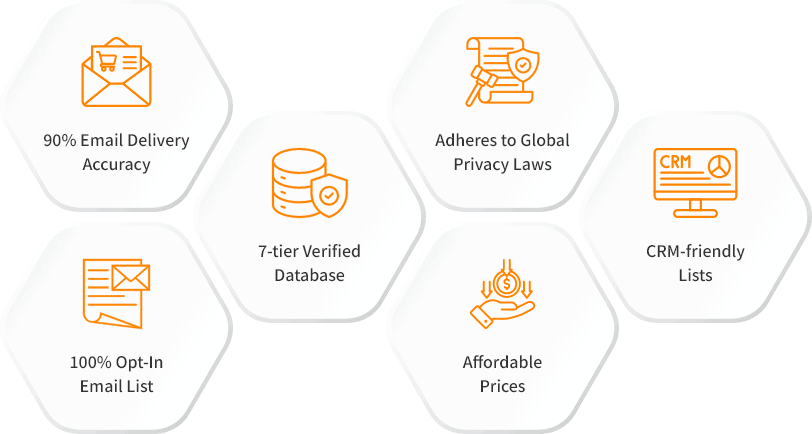
Over 5,000 businesses worldwide trust our verified B2B database to connect with the right decision-makers, engage high-value prospects, and close deals faster. With our 7-tier verification process, you get accurate and up-to-date contact lists tailored to your target industry, location, or technology stack.
From startups to Fortune 500 companies, our clients use our data to boost response rates, shorten sales cycles, and maximize ROI. Whether you are running email campaigns, account-based marketing, or cold calling, the right data puts you ahead of the competition. It’s time to power your growth with the same trusted resource industry leaders use every day. So, why are you still hesitating? Grab our technology users email list now and stay ahead of your competitions!
A high-quality Technology Users Database, like the ones verified through multi-step validation processes, ensures accuracy rates above 90%. This minimizes bounce rates and improves the effectiveness of your outreach.
A Technology Users List is segmented based on the technologies a company is already using. This means you’re not just reaching random businesses—you’re targeting those with a demonstrated interest or need for solutions related to that technology.
A Technology Users Mailing List typically includes company names, industry, size, technology type/version, contact names, job titles, direct emails, phone numbers, and location. This data is highly useful for personalized marketing campaigns.
A Technology Customers List lets you target businesses that already use certain tech products, making them more likely to be interested in complementary tools, services, or upgrades. This targeted approach boosts engagement and conversions.
Yes. A Technology Mailing List can be segmented by geography, industry, or company size, giving you the flexibility to run local, regional, or global campaigns with verified contact data.
Absolutely. You can request Technology Users Lists segmented by platforms like AWS, Salesforce, Shopify, Oracle, or any other technology to match your campaign’s needs. For more, contact our team now!
A Technology Users Email List allows you to directly reach decision-makers who are already using relevant technologies, making your outreach more targeted, increasing engagement rates, and ultimately generating higher-quality B2B leads.
A Technology Users Contact Database contains verified business contact details such as names, job titles, company information, phone numbers, and direct technology users email addresses, enabling you to execute precise and personalized marketing campaigns.
You can obtain accurate technology users email addresses from reputable B2B data providers who verify their databases through multi-step processes. This ensures you’re reaching valid contacts and reduces bounce rates for your campaigns.